
Understanding Trichotillomania Symptoms: A Resource for Recognition and Recovery

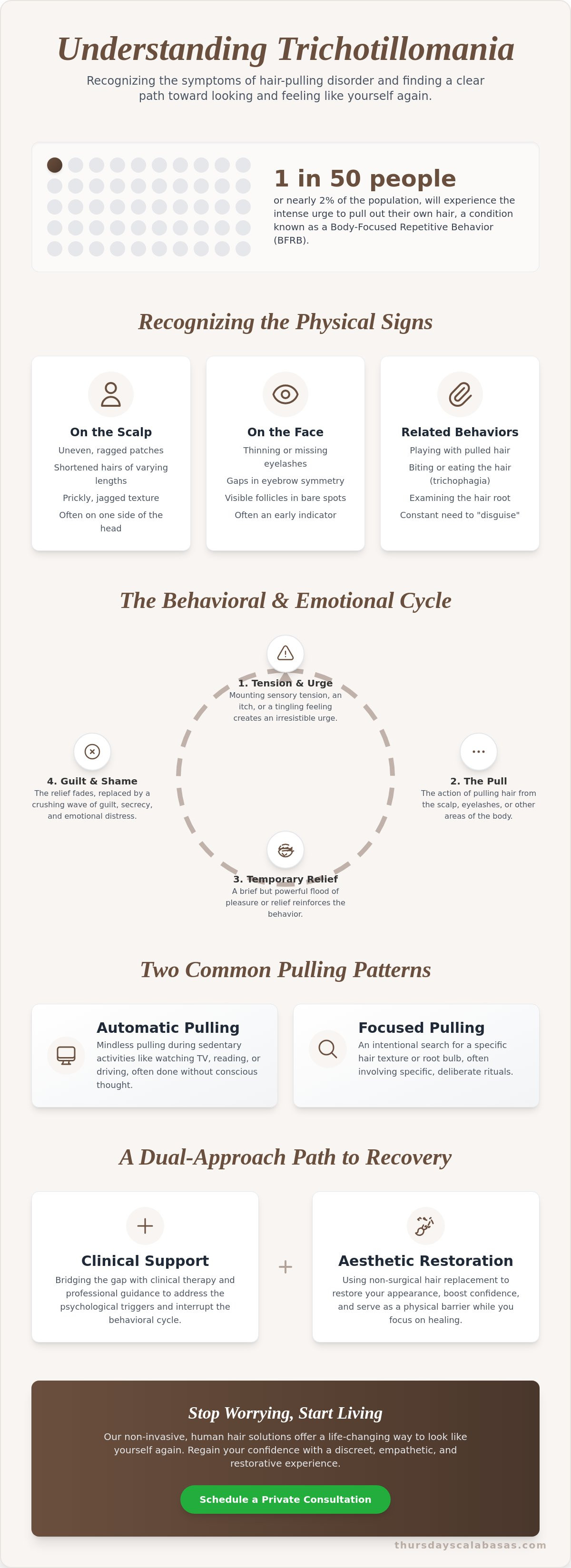
Did you know that approximately 1 in 50 people will experience the intense urge to pull out their own hair at some point in their lives? It's a statistic that underscores a silent struggle for nearly 2% of the population. If you've found yourself staring at a mirror, tracing the edges of a new bald patch with a heart full of guilt, you aren't alone. Recognizing trichotillomania symptoms is the first step toward breaking a cycle that often feels unbreakable. You likely feel the weight of social anxiety every time you leave the house, worrying if others notice the thinning areas or if the damage to your follicles is permanent.
We understand that this journey is about more than just hair; it's about reclaiming your identity. In this guide, you'll learn how to identify the specific physical and behavioral signs of hair-pulling disorder and discover a clear path toward looking like yourself again. We'll explore the clinical side of the condition, including how it co-occurs with anxiety in many cases, and introduce you to restorative Los Angeles resources. At our salon, we believe in a future where you can stop worrying and start living.
Key Takeaways
- Identify common pulling sites like the scalp and eyelashes to better understand the physical manifestation of this body-focused repetitive behavior.
- Decode the psychological cycle of tension and relief that fuels trichotillomania symptoms to help you anticipate and manage irresistible urges.
- Address the emotional toll of maintaining a daily "disguise" and find ways to navigate social anxiety with newfound clarity.
- Discover how non-surgical hair replacement at our salon offers a life-changing way to look like yourself again while you focus on healing.
- Learn how to bridge the gap between clinical therapy and aesthetic restoration with a dual-approach strategy for long-term confidence.
Table of Contents
Recognizing the Physical Symptoms of Trichotillomania
Trichotillomania is more than just a habit; it's a clinically recognized body-focused repetitive behavior (BFRB). For the 1 in 50 people living with this condition, trichotillomania involves a persistent, overwhelming urge to pull hair from the scalp, eyelashes, or eyebrows. These trichotillomania symptoms often manifest as a physical sensation of mounting tension that only subsides once the hair is removed. This "irresistible urge" is a hallmark of the condition, often followed by a brief sense of relief. Some individuals also engage in trichophagia, which involves playing with or biting the pulled hair. This behavioral cycle can lead to noticeable physical changes that quickly impact your self-esteem and daily comfort.
Visible Signs on the Scalp and Face
Hair loss from pulling doesn't look like typical genetic thinning. It often appears as uneven, ragged patches that defy natural patterns. Because most people use their dominant hand, these patches frequently show up on one specific side of the head or face. You might notice "shortened" hairs of different lengths in a single area, creating a jagged, prickly texture. In the mirror, this looks like broken strands rather than the smooth surface of alopecia. If you're noticing thinning eyelashes or sudden gaps in your eyebrow symmetry, these are often the earliest indicators that the behavior is escalating into a cycle you can't control alone. Jagged edges. Uneven growth. Visible follicles. These are the markers of a struggle that deserves compassion, not shame.
When to Seek Professional Guidance in Los Angeles
Recognizing the shift from a nervous tic to a clinical disorder is vital for your long-term follicle health. If the urge to pull is interfering with your social life or causing deep emotional distress, it's time to reach out. Early intervention is key to preventing permanent scarring of the hair follicles. Our Calabasas hair salon serves as a discreet, empathetic first step for those seeking an evaluation. We don't just see the loss; we see the person behind it. We provide a space where clinical understanding meets high-end restoration, helping you bridge the gap between recognizing trichotillomania symptoms and beginning your recovery. You don't have to wait for total hair loss to seek support. No surgery. Non-invasive. Human hair. Restoration is possible at any stage.
The Behavioral Cycle: Urges, Tension, and Relief
Understanding the psychological engine behind hair pulling is the first step toward reclaiming your peace of mind. The cycle typically begins with a "pre-pull" phase, characterized by a mounting sense of sensory tension. It's a physical itch, a tingling on the scalp, or a restless energy in the fingers that demands action. When the hair is finally removed, the brain experiences an immediate, albeit brief, flood of relief or pleasure. This neurological reward is what reinforces the habit, making it feel like a necessary coping mechanism rather than a choice. By identifying these specific trichotillomania symptoms, you can begin to deconstruct the rituals that keep the cycle in motion.
Automatic vs. Focused Pulling Patterns
Not all pulling happens with the same level of awareness. Many individuals experience "automatic" pulling during sedentary moments. You might be watching TV, reading a book, or stuck in Los Angeles traffic when your hand moves toward your scalp without a conscious thought. In contrast, "focused" pulling involves an intentional search. This often includes specific rituals, such as hunting for a hair with a "kinky" texture or a specific root bulb. Recognizing whether your pattern is mindless or deliberate is crucial. It helps our experts determine which hair restoration tool, such as a custom topper or a full hair system, will best serve as a physical barrier and a confidence booster. Different patterns require different solutions. Awareness is your greatest ally.
The Emotional Aftermath: Shame and Secrecy
The relief found in the moment of pulling is almost always followed by a crushing wave of guilt. This emotional "hangover" is a hallmark of the condition. You might spend hours in front of the mirror, using heavy makeup to recreate eyebrows or strategically pinning scarves to hide a new bald patch. This constant state of "disguise" is exhausting. It feeds a cycle of secrecy that can feel like a prison. At our salon, we believe the path to recovery starts with shedding that weight. Our "Stop Worrying, Start Living" mantra isn't just a slogan; it's a promise that you can step out into the world without the fear of discovery. If you're tired of hiding, reach out for a private consultation to see how we can help you look like yourself again.
The Impact of TTM Symptoms on Daily Life
Living with the visible effects of hair pulling often means your calendar is dictated by fear rather than desire. The weight of trichotillomania symptoms doesn't just rest on your scalp; it weighs heavily on your social life. A simple pool party in Malibu or a breezy afternoon in the Calabasas hills becomes a source of intense panic. You find yourself constantly scanning the environment for threats: wind that might shift a hair strand, bright lights that could reveal a thinning patch, or water that might wash away your carefully applied camouflage. This psychological burden is exhausting. It turns everyday activities into a high-stakes game of hide-and-seek where the goal is simply to remain unseen.
Beyond the emotional toll, the physical complications are significant. Repetitive pulling can lead to skin irritation, localized infections, and even traction alopecia, a form of permanent hair loss caused by constant strain on the follicle. For some, the behavior includes ingesting the hair, which can lead to serious gastrointestinal issues like trichobezoars. Seeking a professional trichotillomania diagnosis and treatment plan is the most effective way to address these risks before the damage to your follicles becomes irreversible. Early intervention protects your future hair growth potential.
Overcoming Social Isolation in Southern California
The unique pressure of the "LA look" can make these struggles feel even more isolating. In a culture that prizes flawless aesthetics, visible trichotillomania symptoms often lead to deep social withdrawal. Our salon offers a restorative environment where you can move from a state of hiding to one of active restoration. We specialize in ladies hair replacement that looks, feels, and moves like your own. It's about more than just aesthetics; it's about giving you the freedom to step out into the Southern California sun without a second thought. Stop hiding. Start living.
Complications Beyond the Scalp
Chronic inflammation from pulling can create a cycle of scalp discomfort that actually triggers more pulling. This is where non-surgical hair systems become a vital tool for recovery. By providing a physical, non-invasive barrier, these systems act as a "tactile reminder" to your brain, interrupting the automatic pulling reflex. They protect the healing skin and allow your natural hair a chance to regrow undisturbed. It's a proactive solution for your spirit and your scalp. If you're ready to break the cycle and reclaim your look, schedule a discreet consultation with our experts today.
Restoration and Recovery: Your Path Forward
Recovery is a journey that requires a dual approach: healing the mind and restoring the spirit. Clinical experts consider Habit Reversal Training (HRT) and Cognitive Behavioral Therapy to be the primary treatments for managing the urges. While a single therapy session in the Los Angeles area can range from $90 to $250 without insurance, the long-term benefit of professional support is undeniable. However, clinical progress often moves slower than the desire for a full head of hair. This is why custom hair restoration is a vital bridge. It allows you to address the visible trichotillomania symptoms immediately, providing the "overfilled joy" of seeing yourself whole again while you do the internal work.
Non-Surgical Solutions as a Recovery Tool
A custom hair system acts as more than just a cosmetic fix; it's a physical barrier that protects your healing scalp. For our clients, particularly those seeking custom men’s hair systems, the system serves as a tactile reminder to break the pulling habit. It covers the sites where the urge is strongest, allowing natural follicles a chance to recover without interference. Whether you live in Ventura County or the heart of Hollywood, we match these systems to your unique lifestyle. No surgery. Non-invasive. Human hair. Looking like yourself again is a powerful motivator that reinforces your clinical progress.
A Compassionate Ally in Calabasas, Thursday's Hair Solutions
Our salon is a judgment-free zone designed for your comfort and privacy. We know that the weight of trichotillomania symptoms can make you feel like you've lost your identity. We are here to help you find it. Our private, empathetic consultations focus on your specific needs and goals, ensuring that your path to restoration is as unique as you are. We don't just provide hair; we provide the foundation for a new beginning. Stop worrying, start living. It's your time to bounce back. Contact Thursday’s Calabasas to begin your transformation and see why so many clients say they are finally at peace.
Your Transformation Begins in Calabasas
Recognizing the physical and behavioral markers of hair pulling is more than a diagnosis; it's the first spark of hope. You've learned how to spot the jagged edges of trichotillomania symptoms and understood the psychological cycle that keeps you feeling stuck. This awareness, combined with the protection of a custom hair system, creates the space your spirit needs to heal. You don't have to wait for your natural hair to regrow before you feel beautiful again. Restoration is a life-changing event that starts the moment you decide to take control.
With over 20 years of expertise in behavioral hair loss, our family-owned and operated salon provides the discreet, high-end environment you deserve. We are confidence architects dedicated to helping you bounce back from the weight of secrecy. No surgery. Non-invasive. Human hair. Stop Worrying and Start Living-Schedule Your Private Consultation Today. Your journey toward overfilled joy is just a conversation away. You've carried this burden long enough. It's finally time to step into the light and look like yourself again.
Frequently Asked Questions
Can trichotillomania symptoms be cured permanently?
Will my hair grow back after I stop pulling it?
Most hair will grow back once the pulling cycle is broken, provided the follicles haven't suffered permanent scarring. Repetitive pulling over several years can lead to traction alopecia, where the hair root is damaged beyond repair. If you notice smooth, shiny skin in the affected area, it may indicate permanent loss. However, many of our clients see incredible regrowth when they use a non-surgical hair system to protect the scalp from further irritation and tension.
How can I tell if my child has trichotillomania symptoms?
Watch for uneven bald patches, missing eyelashes, or a sudden change in hair length on one side of their head. Since the peak age of onset is between 9 and 13 years old, this is a critical window for observation. You might also find hair hidden in their room or notice them frequently touching their scalp during homework or TV time. Identifying trichotillomania symptoms early is essential for preventing long-term follicle damage and reducing the emotional burden on your child.
Is a hair system a good idea if I am still pulling my hair?
Yes, a custom hair system is an excellent recovery tool because it creates a physical barrier between your fingers and your natural hair. This "tactile reminder" interrupts the automatic pulling reflex, especially during sedentary activities like driving or reading. It allows your natural scalp to heal in a protected, non-invasive environment while giving you the immediate joy of a full head of hair. It's a powerful way to break the cycle and start living with confidence again.
What is the difference between alopecia and trichotillomania symptoms?
The primary difference lies in the appearance and the underlying cause of the hair loss. Alopecia areata typically results in perfectly smooth, round bald patches caused by an autoimmune response. In contrast, trichotillomania symptoms present as ragged, uneven areas with broken hairs of varying lengths. Because TTM is a behavioral cycle, the hair loss is often localized to areas reachable by the dominant hand, whereas alopecia can occur anywhere on the scalp without a specific pattern.
Are there specific hairstyles that help hide hair-pulling patches?
While strategic parting, wide headbands, or scarves can temporarily mask small areas, these "disguises" often increase social anxiety. For a more reliable and life-changing solution, custom hair toppers or non-surgical hair systems offer a natural, invisible way to cover patches of any size. At our Calabasas salon, we design these systems to match your exact hair texture and color. This allows you to style your hair freely without the fear of wind or bright lights revealing your struggle.
Disclaimer
The content published on this blog is provided by Thursday's Hair Solutions for informational and educational purposes only and does not constitute medical, legal, or professional advice. Individual results may vary. Always consult a qualified healthcare professional regarding any medical conditions or treatments related to hair loss. Thursday's Hair Solutions makes no guarantees or warranties regarding the accuracy, completeness, or applicability of the information presented.